Gero-Punk Recollections: Part Six–When Rattlesnakes Are Blind

Part six in a series of essays by guest Gero-punk

Velda Metelmann

velda

Mama Sings to Us

Mama had a beautiful singing voice and was often asked to sing at funerals.  She sang to us as she worked around the house.  She sang World War I songs like “Tipperary,” “There’s a Long, Long Trail A-Winding,” “Over There,” “Red Wing,” and lots of hymns from the Cokesbury Hymnal.  We loved the funny songs: “A Frog Went A-courting,” “Mr. Dunderbach’s Machine” but our very favorite was a mournful song called, “The Baggage Coach Ahead” that always made us cry.

The words of that song seem sad to me still:

Twas a dark, stormy night, the train rattled on; all the passengers had gone to bed

Except a young man with a child in his arms who sat with a bowed down head.

The innocent one began crying just then as though its poor heart would break

‘Make that child stop its noise’ an angry man said.  ‘It’s keeping us all awake!’

‘Put it out,’ said another.  ‘Don’t keep it in here.  We’ve paid for our berths and want rest.’

But still not a word said the man with the child as he fondled it close to his breast.

‘Where is its mother? Go take it to her,’ a woman then softly said.

‘I wish that I could,’ was the young man’s reply.  ‘She’s dead in the coach ahead.’

Every woman arose to assist with the child, there were mothers and wives on that train.

They soon had the little one sleeping in peace with no thought of sorrow or pain.

As the train rattled onward a husband sat in tears, thinking of the happiness of just a few

short years.  Baby’s face brings pictures of a cherished hope that’s dead.

Baby’s cries can’t wake her in the baggage coach ahead.

We would beg for the song and Mama would refuse mentioning that we cried when she sang it but we would protest that we were older now and this time we wouldn’t; but cry we did.  Grandpa Gray had an even sadder song about a little boy who was dying and “what would the robins do then, poor things” that Marjy often requested.  I didn’t know how she and Donna could keep back their tears when Grandpa sang that song!  I pushed the leather footstool behind a chair and hid my face on that; no handkerchief and a non-absorbent surface made it hard to hide my messy snuffles.  Could it be possible that Marjy who was always so good asked Grandpa to sing that song because I always cried?

Entertainment

Singing around the piano was a frequent Sunday afternoon entertainment, the pianist changing as cousins learned to play and became skilled.  Mama and her sisters harmonized with hymns and show tunes.  Mama was a soprano and Aunt Mabel an alto.  With no radio, television not invented, singing, reciting, and games were our entertainment.  I memorized “Out to Old Aunt Mary’s” by James Whitcomb Riley and tied for first place at an elocution contest in town when I was in second grade.  I got second place, as the other contestant was a high school senior and wouldn’t have another chance the judges said, while I, being so young, could compete another year and win.  However, the elocution contest was never held again.

Climbing Trees

Two tall locust trees grew one at each side of Aunt Goldie and Uncle Elmer’s front yard gate.  They were perfect to climb with limbs set in just the right spaces for hands and feet.  We were forbidden to climb those trees, however, as the tops of the trees were slender and swayed in the wind causing us to panic and shout for Aunt Goldie to stop whatever she was doing at the moment to guide us down to a level where we felt safe.  My attitude was, and Marjy thought so, too: “True, we had been scared last time but today we were older and more able than we had been last time, away last month, so it would be ridiculous for the old rule to still apply.  It must be obvious to all that we girls were far more mature.”  Climbing was so much fun, stepping lightly from limb to limb, lithe, nimble – until that last paralyzing moment when an unlucky current of wind bent the trees and both Marjy and I holding on with feet and fist began to call for assistance in desperate voices.  Aunt Goldie would come, exasperated but patient, and tell us, “Left foot down, now right foot down” until we could breathe again.

Don’t Attract Attention

Not attracting notice as we played was a primary concern for all of us first cousins on the Gray side.  We could be together all day without a single quarrel or loud voice and with nobody crying.  Any minor fracas, any unhappy voices at all, and Aunt Gertie or Aunt Goldie would erupt into our group and shunt the girls into the kitchen for the rest of the day.  We did a far better job of genial association than the grownups did – almost every time there was a family gathering attended by Aunt Eva some kind of row developed.  We would hear our parents talking about it later – how ‘Pa’ had stepped in and decisively settled it.  Uncle Bunt and Aunt Eva lived in California so they were not present often and missed most of the gatherings at Christmas, Easter, or on Sundays.  Grandma was so sorry to see her beloved son drive off with his wife that she would follow them down the lane crying out in loud sobs and tossing her apron over her face.  I think she could have loved Aunt Eva devotedly had that been allowed.  At least, she would have thought it her Christian duty to do so.  Who would want to be loved for Christian duty?

Sin

Grandma Gray believed that playing cards were wicked.  Clubs, diamonds, hearts, and spades from the ace to the king were tainted by association with gambling and were not allowed in her house.  Mama defined sin differently when it came to cards, though she did not aggravate Grandma by leaving playing cards in view when she came to visit.  There must have been something suspicious about cards in the book called Methodist Discipline because the grown-ups had laughed guiltily after the minister left because a deck was lying in plain sight when he came.

The Saunders side of the family stood around the piano and sang when they were together or played any kind of cards they wanted to without a qualm of conscience – and they were Methodists, too.  It was at Grandma Saunders the great rummy tournament took place that determined who had to do the dishes and who got to cook.  The losers did the dishes, all right, but they left the glasses and silverware and pots and pans so another big game had to determine who did those.  We kids were free from dish duties and could hang over the shoulders of the grown-ups or join in the games.  We’d voluntarily dry dishes and help out because we didn’t want to miss out on the fun.

Flying

The place where the path dipped and rose to cross the bridge was the spot on the path where I tested each day to see if it were a day I could fly, or one I could not.  Sometimes I’d float over the path, touching a toe down whenever I wished but other days I had to walk in the ordinary way.  Flying days always interspersed with others until the day I explained this ability to Grandpa Gray.  He was nice enough about it but firmly negative; he said I could not fly.  I’d climbed the apple tree he was pruning and since I had flown that very morning, I stepped confidently off the branch to prove my ability but tumbled to the ground.  That surprised me.  Grandpa’s words were magic too powerful to overcome and from then on I never could fly again, except when dreaming.

Sunday school

My earliest memory of Sunday school was when Aunt Mabel was my teacher.  She wore her long black hair in two flat coils on each side of her head and when she picked me up I often stuck my nose in those coils; I liked her smell.  One Sunday morning after a trip to Richland, I offered to sing a song learned in the church over there.  Aunt Mabel smiled and told me to stand in the front.  I sang, “I washed my hands this morning so very clean and bright and gave them both to Jesus to work for him til night.  Little feet be careful, where you take me to, anything for Jesus, I will gladly do.”  The children must have liked it, as they laughed and clapped.  But when Aunt Mabel carried me to Mama and told her I had sung, Mama said, “She can’t carry a tune in a basket.”

Sunday school was our only contact with other children outside the family until we were in school and dressing up in our best clothes and being in town where there were stores and sidewalks had its own reward.  Sundays were never spent alone: we went to a relative’s house or they came to ours.

After Aunt Mabel stopped being my teacher, my feelings about Sunday school were mixed, veering more to the south of boredom than to the north of interest.  Gwendolyn, who taught the youngest class, made me squirm with her sweaty hugs and cloyingly sweet affection; in her class we did nothing but play in the sand tray and hear a simplified Bible story.  Grandma Gray’s heavy black leather Bible lay open on its own special stand.  That was different – with pictures of naked men and women, with long hair, leaves and snakes winding about.  It made me feel almost wicked to look at those pictures but they were more exciting than the glossy, colored lesson leaflets.

Grandpa listed every birth, death, and marriage in the front of that Bible, and I could see my own name there – and eventually would see the date of my marriage, the name of my husband, and each of our children as they appeared.  Sunday school was inevitably followed by church.  I understood the Bible verse, “Blessed are those who hunger and thirst after righteousness for they shall be filled.” to mean that by sitting still and not swinging my feet, I should wait, hungry and thirsty, through the pious sermon for the delicious and filling Sunday dinner that was sure to follow.

Giving

“Give said the little stream give oh give, give oh give,” we sang as we marched to our classes from our seats in the assembly room of Sunday school.  I had a little red purse I was proud of and carried it each Sunday morning.  Daddy gave me money each week so I would have a contribution to make to the collection.  I remember with happiness the generous feeling of largesse I had as I put my contribution into that basket.  I didn’t give all the money but a fair share of it until the day my parents were looking for change with the hope of going to a movie.  I offered all I had in my red purse (85 cents) but my parents were shocked that I had any money at all.  It seems I had done wrong in not giving the entire amount.  Of course, I gave all of it after that but never with any sense of my own generosity.  The contribution was no longer mine but my father’s.

Velda Metelmann is a student in the Master of Arts in Interdisciplinary Studies program at Marylhurst University. She’ll be commencing  her thesis work on “a good old age” this autumn.

Posted in Uncategorized | Leave a comment

Gero-Punk Appeal: Call for Collaboration

Hey, friends! Time for a test of the Gero-Punk Emergency Broadcast System!

Image

Have I got your attention?

To remind you: The Gero-Punk Project is not only a space for capturing stories about my adventures traveling through the life-course, but a space for collecting stories about your adventures as well. Equal to being an essayer, I’m a convener. But I’m a lonely convener without friends to play with! And, as I’ve said before, I think better with others. So: I’m putting out the call – it has been almost a year since my last formal invitation for contributions to the Project. Won’t you do a bit of essaying of your own (and let me publish it in this awesome time/space/place)?

Perhaps you need to know a bit more about what you might write about. Okay, fair enough.

Recent essays have explored how we are changed through the experience of our loved ones returning to the stars.  Helen wrote about her father’s death. Penny Layne wrote about losing multiple grandparents in a short period of time. Larry shared with us the loss of his life partner. And my old-and-no-longer-living-on-this-planet friend Fred shows up a lot in my own writing. 

As well, some of us have shared stories about the pain of loss in love. I’m talking about real-time loss, anticipated and not, as relationships change, even blow up or, perhaps, become something new and quite (unexpectedly) lovely. Check out Jen O.’s essay in which she contemplates Eros in long-term (and new) relationships.

Oh! And some of us have written about relationships with other creatures – our beloved companion animals with whom we travel through the life-course but at vastly different rates of speed. Lorie and Simeon both wrote about the strange fact that if you share your life with a non-human animal, you realize at some point that for but a short moment in time you are the same age and then, quite suddenly, your animal friend is older than you are and you realize you won’t experience old age together. 

Several of us have written about how hard transitions can be whenever they happen in our own and our close others’ travels through the life course. Colleen, Erica and I have all explored what it feels like to be mid-life women, negotiating various responsibilities and roles (not to mention our changing bodies) and how we’ll only know we’ve experienced mid-life after-the-fact. (It is relative, yes? Possibly I already had my mid-life in my thirties, or perhaps I’m in my mid-life now, or maybe I will live to be 120, so I’m a decade or two away from even commencing mid-life.) In case you missed it, I recently proclaimed that I hate midlife and how my smarty-pants professional Gerontological knowledge falls short in helping me make it through my own aging journey. 

Also on the theme of growing pains, Amber wrote about helping her young son negotiate his nighttime fears around mortality and the almost spontaneous emergence of new maturity she witnessed in him once he felt heard by her and thus safe. I’ve written about navigating interconnected developmental challenges as my daughter begins her last year living with me and my mommy faces bravely her later life.

In case you were wondering, my mommy is not only a character in many of my essays, but she has spoken for herself, sharing her experience of being a student in the women’s issues in aging course I taught this past spring, and soon she’ll be writing about her decision  to move into subsidized housing for older adults.

Teddy, the youngest contributor to the Gero-Punk Project, offered us perhaps the greatest example of the power of self-reflection, generosity and acceptance (of one’s own complicated feelings as well as of others’ choices for their lives) when he wrote about how his mind changed toward his father’s much younger second wife once he let himself actually get to know her. 

And Velda and Gaea, our wise old crones, shared stories of the past and aspirations for the future with honesty and humor, embodying in their writing different styles of active elderhood. 

Britta, Jo Anne, and Erica have promised me forthcoming essays. And Noraleigh says maybe her partner will cook up something about his adventures.

What will you cook up?

If you are inspired to contribute something — no matter how provisional and drafty —  to the Gero-Punk Project please contact me at jsasser@marylhurst.edu.

Thank you for your time and consideration. Shine on, friends.


Posted in Uncategorized | Leave a comment

Gero-Punk Contemplation: Life is the only way

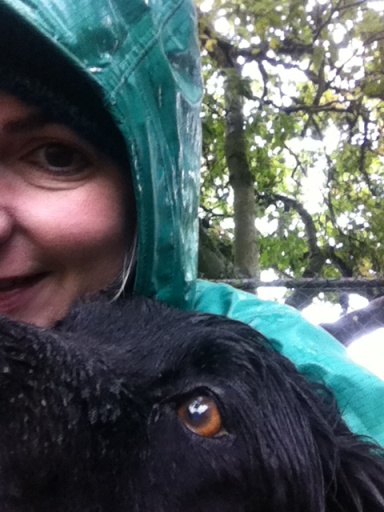
Happy-the-dog and I got caught in a huge downpour on our walk this morning. I thought I had perfectly timed our walk for in between downpours, but shortly after we commenced, so did the rain.

 Image

Happy and I had an interesting walk. I learned that my green waterproof jacket is still green but no longer waterproof.  I also learned that the violet-green swallows love dive-bombing the pond in the pounding rain. And I got to see something I don’t often get to see: the layers that live underneath the surface. Perhaps because of the storm or the construction at our park, the Water Bureau had cut a large rectangle out of S.E. 21st street’s asphalt and then dug a hole so deep that I could barely see the top of the wet head of whoever was inside the hole fiddling around. As we walked closer to the hole I was able to peer inside at tree roots, stratum of rock and soil; underground mysteries.

+++

I haven’t been on a walk for a few days, which is quite uncommon for me.  Happy hasn’t been feeling well—he had a relapse of a bad skin infection and until the steroids kicked in, he was driven to distraction by the overwhelming impulse to scratch his itches.  As for me, I worked myself to a state of utter exhaustion finishing up the big book project before Fall Term at my university starts. I got every last thing related to the revision of the book and all the instructional materials submitted this past Friday, three days before the deadline, which is today.

 I can’t help wondering if it was worth it to be ahead of the deadline if my reward was three days of puniness in the extreme.

 +++

I felt really great on the walk! My body has been pleading with my mind for movement these past few days as I’ve been in sedentary scholar mode. Though my clothes and hair are still wet, I quite enjoyed being caught in the downpour, out in the world and feeling embodied in a way I haven’t experienced much lately.

+++

Today is the first day of Fall Term at my university. Hooray! I love this time of year!

I fell in love with this time of year, specifically with the beginning of the school year, when I was a tiny girl attending nursery school. Forty-something years later – all of those years filled with learning (and schooling) and then teaching (and more learning) — and I still feel like I’m falling in love all over again on the first day of school. I have a general distaste for shopping for anything other than food, books, and music, but there are few things as exhilarating as shopping for school clothes and supplies. These days, though, such start-of-the-school-year adventures are had on behalf of my daughter who is a couple of weeks into her senior year of high school.  (Alas. How I miss going school clothes shopping with my Gramma Jewell!)

I now have a different ritual for the new school year. In the days leading up to the start of Fall Term – any term, actually– I enjoy reviewing all of the accumulated artifacts for each of the courses I’m soon to teach: outlines and scripts for each session; learning project plans and handouts; assigned readings; archived student work; teaching evaluations; copies of poems I’ve read in class and scraps of paper covered with jotted notes about some connection a student made between ideas or some experiential learning activity I might try in the future; prompts for in-class free-writing and discussion.

I get to teach four really awesome courses this term, though it is a strange collection that might at first consideration seem disparate. Here they are:

  • Senior Seminar (a team-taught undergraduate liberal arts capstone course);
  • Learning: A Fundamental Human Process (an undergraduate Human Sciences elective);
  • Human Studies Perspectives (a team-taught pre-requisite course for Human Studies majors); and
  • Embodiment in Later Life (a core graduate-level and upper-division undergraduate-level required gerontology course).

I’ve taught variations of each of these four courses before and in the case of Embodiment in Later Life and Senior Seminar, I’ve taught them many times over the course of many years (ten or more!), so there are a lot of artifacts to review and new plans to be hatched! In advance of teaching a course again, I always make some adjustments to the choreography – sometimes the changes are minor, sometimes the changes are major.

For the two courses I facilitate in collaboration with colleagues  – Senior Seminar and Human Studies Perspectives — there are additional layers of individual and group pre-work that must be done, as effective real-time collaboration in the classroom (whether the classroom is on-campus or on-line) requires a great deal of intentionality, humility, confidence, empathy, ego-work, and preparation.

So, in addition to the violet-green swallows, my ineffective raincoat, and the layers that live under the asphalt, I was also contemplating all of this as Happy and I were on our wet walk.

 +++

As Happy and I stood under a tall thick conifer tree during a particularly fierce moment of the downpour, I recalled a favorite poem from Wislawa Szymborska:

A Note

Life is the only way

to get covered in leaves,

catch your breath on the sand,

rise on wings;

to be a dog,

or stroke its warm fur;

to tell pain

from everything it’s not;

to squeeze inside events,

dawdle in views,

to seek the least of all possible mistakes.

An extraordinary chance

to remember for a moment

a conversation held

wtih the lamp switched off;

and if only once

to stumble upon a stone,

end up soaked in one downpour or another,

mislay your keys in the grass;

and to follow a spark on the wind with your eyes;

and to keep on not knowing

something important.

+++

“To keep on not knowing something important” may very well be the idea around which the four courses I’m honored to be a part of this term cohere. Actually, this bit from Szymborska’s perfect poem may sum up something essential about why I keep doing the stuff I do, even when it is arduous and exhausting.  And it might also serve as a reminder to me in the future that I almost always get into trouble when I forget that confusion is a legitimate state of being, that I can take a walk and still get my work done, and that as with rain storms everything, every single thing, is constantly changing, is in a state of flux.

 +++

Would it surprise you to hear that the moment Happy and I walked up the path to the front stoop of our house the downpour stopped (at least for now)?


Posted in Uncategorized | 1 Comment