By guest author Gerondolyn Creech
May 3, 2025
Looking out of the airplane window, as the pilot rolled the plane to the right, I gazed upon the majestic Washington, D.C. skyline one last time. As the tears streamed down my face, with my faith in God and the belongings that could fit in my carry-on items, I said goodbye to the only home I had ever known, to my family, and the life I had built for my daughters. With one giant first step behind me, and 3000 plus miles still to go before arriving in Portland, Oregon, I sat back in my upgraded seat (might as well go all out, right?) and thought about the journey that led me to this point. I had my life all figured out: continue to build my career as a chef, buy a house, and keep on loving my family in D.C. – the end. So what was I doing on this flight with a one-way ticket, heading across the country, pursuing a new life as a gerontology professional?
December 7, 2020
I received a phone call from the hospital to get there quickly because my mother was actively dying. She passed the next day, and my world completely shattered. Up until that point, I knew what I wanted to do professionally for the rest of my life: cook, serve, and feed people’s souls through food. It was my passion.
One of my favorite verses at that time was Deuteronomy 28:12:
The Lord will open the heavens, the storehouse of his bounty, to send rain on your land in season and to bless all the work of your hands. You will lend to many nations but will borrow from none.
Thousands of people were nourished by the food that I crafted with love and care, dishes that came to me in dreams, and flavor combinations that danced harmoniously in my mind. I did the work I was called to do, and served those people who were led to me, and I did it all graciously and happily.
Of all the people I was blessed to feed, there was none I felt more honored to serve than my momma. Boy, I tell you the truth, Renea Callie Creech knew I was coming with a bag of her favorite Chinese-American style dishes. I would spend hours cooking everything from shrimp egg foo young to lo mein, jumbo-sized egg rolls, wonton soup, and more. Food from local Chinese carryout restaurants would swell her ankles, so she was glad she could eat the foods she loved without the side effects.
After all of the struggles our relationship had endured over the years, after all of the stress and strain my teenage and young adult years caused, finally I could give something back to my momma, the woman who sacrificed so much for me. When I lost her, my most honored guest, I lost my passion for cooking altogether.
Life without my momma
After taking the whole year of 2021 to heal and learn to live in the new world, a world where I would never see or talk to my momma again, I felt that I was ready to return to work. I tried to cook for a small event, but it wasn’t the same. I wasn’t the same. Everything felt like a struggle, from planning the menu to procuring the ingredients and creating the dishes. It was all a struggle. There were times when stepping into the kitchen would push me to the brink of an anxiety attack. I realized that I had to step away to grow, even if that meant growing away from the career that once brought me so much fulfillment.
Before losing my momma, I had taken a few jobs as an in-home chef and caregiver, so I already had an interest in working with older adults. When I was twenty-four, I went into respiratory failure and needed to live in a Skilled Nursing Facility for a month. I was only there because my doctor was nervous to send me home after nearly dying, though I had regained functioning and didn’t require any ADL assistance. During my time there, I saw abuse and neglect firsthand, and the desire to help long-term care residents has always stuck with me. So, in 2022, it seemed like a natural progression for me to accept a server position in an assisted living facility. It didn’t take long for me to realize that I loved working with older adults, but I hated working in assisted living facilities. I hated not having the power to effect change or truly help the residents.
“Learning gerontology”
One day, I randomly Googled “geriatric degrees,” and Portland Community College’s gerontology program showed up in the results. Before that Google search, I had never heard of gerontology, and I still can’t quite explain what made me decide to sign up. All I knew at that moment was that I was going to learn gerontology, and that learning gerontology was going to help me to help older adults.
Well, I have spent the last two years learning gerontology, and the closer I have gotten toward program completion, the more insatiable my appetite becomes. Two years is not enough; I need more, I need to grow more, learn more, see more, fight more. The study of gerontology has opened my eyes to the profound extent to which ageism is ingrained in our society, and the significant role I can play as an informed gerontologist in combating it.
Chasing the sunset west
On the day of my flight, I arrived at Reagan National Airport hours early, watching the other planes, some departing, some arriving. As I weighed my carry-on luggage, I thought of the weight of other burdens I’d had to shed to make this journey: the weight of fear, mind-cluttering doubt, the sharp, painful edges of past hurts. I folded my family’s fears and anxieties like a bulky sweater I couldn’t take with me, and left certain relationships on the tarmac, their chapters in my life had to end so I could turn the page. All of it, I surrendered for the pursuit of gerontology.
As my plane climbed to cruising altitude, chasing the sunset west, I envisioned the time zones collapsing like portals, each one a threshold to memories I had packed away. With every mile I traveled closer to my destination, I felt lighter. Somewhere high in the clouds, I began reflecting on who I’d been and who I was becoming. This wasn’t just a flight to Portland; it was a pilgrimage toward the life I spent the past two years dreaming of, one where I’d honor aging not as a burden, but as a story waiting to be told. But what kind of storyteller would I be? What kind of gerontologist would I be? These questions led me to wonder, “If not me, then what kind of gerontologist would I want advocating for me?”
As someone who reserves the most harsh judgements for myself, the answer has been a little hard to accept, but the kind of person I would want advocating for me is me. (This realization still brings me to tears.) A person who empathizes and cares. A person who is driven to fight, to stand up for me, and speak up when I can’t. A person who sees aging as a normal part of the life course and will work to educate and empower the older adult community towards self-advocacy. A person who works to bridge intergenerational gaps to cut ageism off at its knees in the fight to end it. I have a fire inside, it feels insatiable. I want to tear down the walls, rip ageism up from the roots, and watch it burn to ashes!
Portland, Oregon, I’m here. Against every doubt, after every goodbye, I made it. I can finally breathe. The fresh air doesn’t just fill my lungs, it fills my heart. I can feel the love of God enveloping me, a divine embrace that protects and guides me along this journey. I feel my ancestors’ hands upon my back, their strength and wisdom holding me up when I feel weak, and urging me forward. I feel the empowerment of my professors pouring into me over the past two years, their knowledge and guidance filling my cup until it overflows. And in that overflow, I see my daughters awakened; their eyes are open to the sneaky places ageism hides, and their young spirits are now aware and tuned to fighting injustice in ways I once only dreamed.
A promise
I have lived my entire life oppressed for my race, my brown skin, my sex, my socioeconomic status, my marital status, my hair texture, my weight, my disability, because I was too young, because I’m getting too old, and the list goes on. Society has always backed me into corners that I have had to fight my way out of. I still have a lot of fight left in me. This is more than a threat, it’s a promise. And I keep my promises, because that is the kind of gerontologist I am.
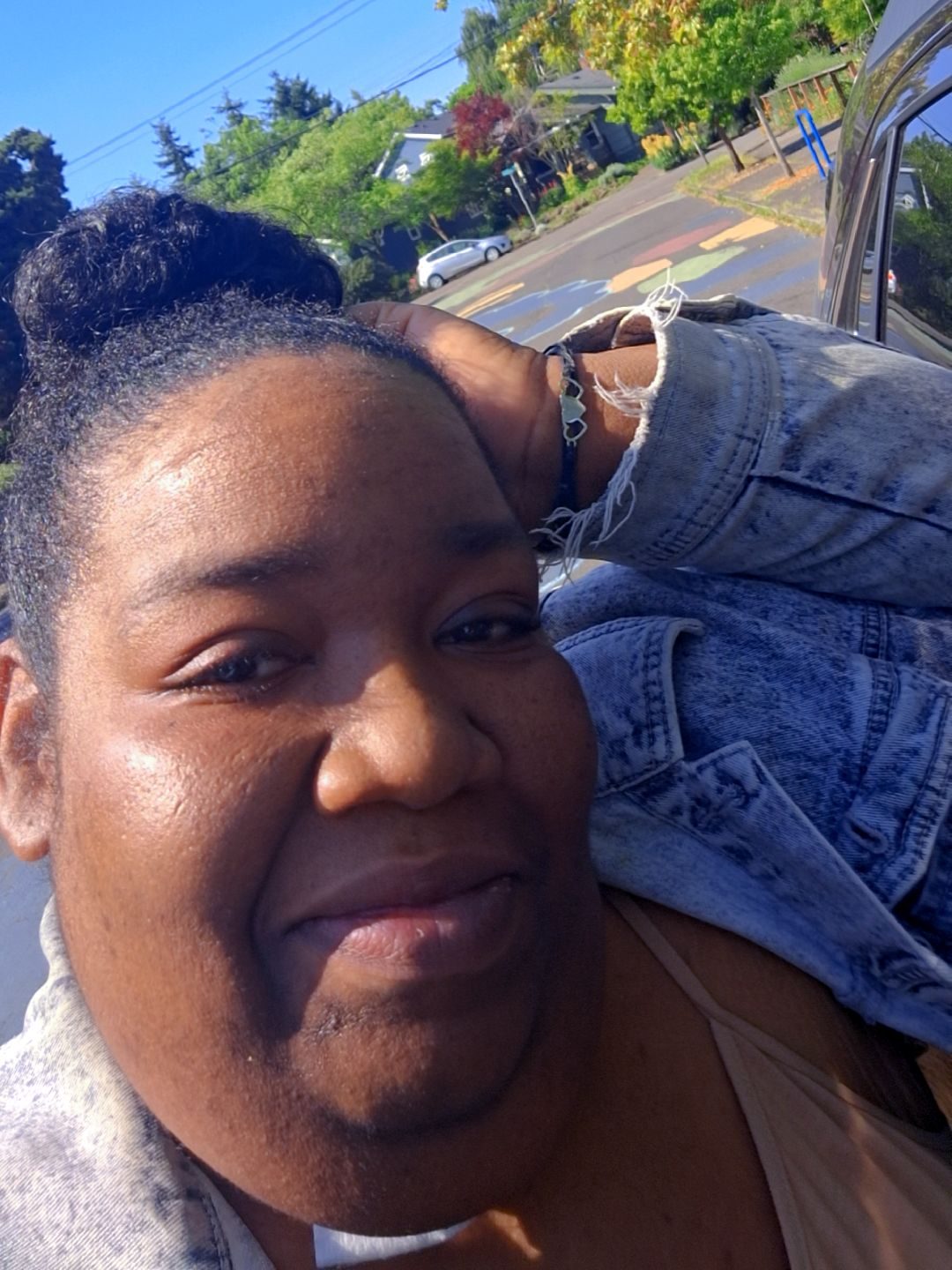
Author Bio: Gerondolyn Creech is a gerontology student from Washington, DC who recently moved to Portland, Oregon. After a fulfilling career as a chef, her life took a transformative turn following the loss of her mother, which inspired her to advocate for older adults. Drawing on personal experiences, including witnessing disparities in long-term care, she is committed to combating ageism and empowering aging communities through education, advocacy, and intergenerational connection. Driven by faith, resilience, and an unwavering passion for justice, Gerondolyn aspires to be a voice for marginalized elders and a catalyst for systemic change in gerontological care.

 Jenny Sasser, Ph.D.
 The Gero-Punk Project
what beautiful writing! I wish you much success in your pursuit of a new career.
I loved reading about what propelled you to come West and about your relationship with your momma. Thank you for sharing a bit of your life and can’t wait to see what this big move brings you!
Folded like a bulky sweater – my new mantra – So perfect
Such a great piece! Welcome to Oregon.
Gerondolyn, your journey is both inspiring and deeply moving. It’s powerful how you’ve turned personal loss into purposeful advocacy, and your passion for justice and elder care truly shines through. Your story is a reminder that lived experience can be a strong foundation for transformative change. Keep using your voice, you’re already making a meaningful impact! I deeply resonated with your journey all the best!
Angela K
Thank you so much for sharing your experiences, your motivations and your commitment to gerontology – your devotion to humanity in general. Beautiful!
thank you for sharing your journey with us Shawnta! Your writing and use of metaphors made me feel like I was taking the trip with you. I wish you and your girls SO much happiness and success here in Portland, we’re proud to have you in our ranks!
Shawnta, Thanks for sharing such a beautifully written and passionate essay describing your path to Gerontology and Portland, Oregon. I admire your courage and vision to serve an older population. I am excited for what the future holds for you.
Thank you for sharing what is on your heart. It’s so amazing how you went through such a tough time after your mom passed away, but then you turned it into something so powerful. Like, you were a chef and loved cooking, but losing her made you realize you needed to do something different.
It’s heartwarming to me that you found out about gerontology and decided to move all the way to Portland to study it. That’s a huge leap! You’re so determined, and it’s inspiring to read about how you’re finally able to breathe and feel happy. May you be blessed in your journey.
Thank you for sharing such a beautiful and inspiring piece of your story, I really felt that! Welcome to Portland, I hope to run into you somewhere in the beautiful NW.